
"coffee cultivation"
30000 article(s) found

The History and Development Story of Salvadoran Coffee beans and the Flavor and Taste characteristics of Salvadoran Mocha beans
In the Apaneca-Ilamatepec volcano region of the Apaneca-Ilamatepec volcano region of the national El Salvador, Finca La Esperanza hopes to win the host Pacas Pacas family elevation 1700 masl mocha adzuki bean Natural Japanese taste thick, rich, with cardamom, wine, milk chocolate fragrance, more than the previous year, more

Mexican coffee production area with a long history of coffee cultivation
In Mexico, coffee cultivation has a long history. At the site of Cafe Clamori Farm, there is a tradition of using coffee products to make all kinds of coffee works of art (Coffee Art). Among the artworks on display on that day are traditional coffee trees, coffee pens, coffee necklace bracelets, coffee paintings and coffee cloth. These works of art are pure hands of local women.

Cultivation method of Yega Xuefei Coffee in Ethiopia
Various forms of coffee cultivation can be found in Ethiopia: everything from wild coffee forests and semi-developed land to traditionally operated plots to modern plantations. About 50% of the coffee is grown more than 1500 meters above sea level. Harrar coffee is the highest growing area of all coffee in Ethiopia. Hara coffee can be divided into long coffee.
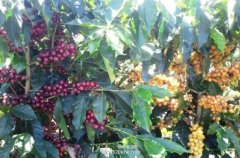
History of Coffee the Development History of Coffee in China
According to historical data, Taiwan's cultivation was successful for the first time in 1884. Coffee trees were planted in China, and coffee cultivation on the continent began in Yunnan. In 1902, seeds were introduced by a French missionary named Tian in Yingong, Binchuan County, Yunnan Province. it was successfully planted in a place called Zhu Kula, which is located on the bank of the Yushan River, a tributary of the Jinsha River. The commercial cultivation of coffee in Yunnan began in 1985, but it has grown.

The most classic iron pickup fine coffee beans cultivation geographical location climate altitude profile
Coffee fruits take longer to develop. Coffee arabica fruit ripens in 810 months, usually in December of the year. Rainfall has a great influence on fruit development, and climate conditions directly affect fruit development of Arabica coffee berries. Typica and Bourbon are the two classic high-quality coffee varieties. In 1991, they were re-cultivated.

A brief introduction to the cultivation of fresh-flavored Ugandan boutique coffee beans, geographical location, climate and altitude
Ugandan coffee is mainly exported to the European Union, of which Germany, Italy and other countries are the largest buyers of coffee. Uganda is the country of origin of coffee grown in Robusta, but commercial cultivation of Arabica species here did not begin until early 1900. Today, there are still a large number of wild robusta coffee trees in Uganda, which is rare in cities in the world. As a landlocked country, Uganda

Colombian Coffee cultivation History Arabica Coffee Bean Iron Bica
The history of coffee cultivation in Colombia can be traced back to the Spanish colonial era in the 16th century, and there are many theories about the history of coffee in Colombia: one: it is said to come from the island of Haiti in the Caribbean and from El Salvador in Central America. Second: in 1808, a priest introduced coffee beans to Colombia for the first time from the French Antilles via Venezuela. One of them
Coffee Culture-- the Origin of Coffee
Drinking coffee is very popular in Europe and the United States. Coffee consumption is also becoming more and more popular in China and other eastern countries. Potential

Colombia Huilan boutique coffee bean tasting knowledge popularization
Colombia huila, Colombia: located in the southwest of Colombia, it is one of the major coffee growing areas. Because there are famous coffee cultivation places in Huilan area, the names of small areas become brand names and circulate. Although the cultivation conditions in this area are also very good, the cultivation infrastructure of coffee cultivation farm and surrounding conditions is not yet available.

The main cultivated areas of coffee trees in Colombia introduce the coffee producing areas in the Andes.
The planting environment edits Colombia's suitable climate to provide a real natural pasture for coffee. Coffee trees in Colombia are mainly cultivated in the Andes, on steep slopes about 1300 meters above sea level, where the annual temperature is about 18 degrees Celsius, annual rainfall is 2000 to 3000 mm, latitude 1-11 15 north and longitude 72-78 west. The specific range of elevation can be exceeded.

Technical specification for cultivation of small seed coffee in Yunnan Province
The technical regulations for the cultivation of small seed coffee in Yunnan Province, which describes the technical methods of small seed coffee garden selection, planning, reclamation, seeds, seedlings, planting, soil management and coffee tree management.

Technical specification for cultivation of small seed coffee in Yunnan Province
The technical regulations for the cultivation of small seed coffee in Yunnan Province, which describes the technical methods of small seed coffee garden selection, planning, reclamation, seeds, seedlings, planting, soil management and coffee tree management.

A brief introduction to the cultivation of high-quality and pollution-free boutique coffee beans in Uganda, geographical location, climate and altitude
The cultivation of coffee in Uganda is all small-scale family operation. The livelihood of 25% of the population is closely related to coffee production. About 500000 farms grow coffee, but mainly Robster. Robusta accounts for 90% of coffee production, and the remaining 1 is Arabica coffee. Arabica and Robusta are harvested from October to February. Ugandan coffee
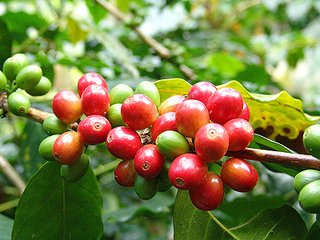
Coffee cultivation and cultivation Coffee cultivation techniques and techniques Introduction to the process of coffee green beans cultivation
(a) seedling propagation coffee seedling propagation can be divided into seed propagation and asexual propagation. 1. Seed propagation (1) Seed collection, seed washing and seed storage In the mature period of coffee (the mature period of medium seed coffee in Hainan Island is 2~3 months, and the mature period of small seed coffee is 9~11 months), fully mature fruits are picked from healthy and high-yield mother trees to make seeds. After the fruits are picked, peeling and seed washing are carried out immediately.

An introduction to the Historical and Cultural Origin of Coffee cultivation in China
An introduction to the Historical and Cultural Origin of Coffee cultivation in China according to historical records, coffee was first planted in Taiwan in 1884, which opened the prelude to the development of coffee in China. The earliest coffee cultivation in the mainland began in Yunnan, when a French missionary brought the first coffee seedlings to Binchuan County in Yunnan Province at the beginning of the 20th century. For nearly a hundred years, coffee was grown in the vast

Species and cultivation techniques of Coffee trees
Arabica bean coffee tree can be divided into two main varieties: Arabica species (Coffea Arabica) and Robusta species (Coffea Robusta/Coffea Canephora). There are also some minor species, such as the Liberian species (Coffea Liberica) and the Alabasta species (Coffea Arabusta), but they are rare on the market.

The situation of coffee production in Vietnam the geographical location of Vietnam is very favorable for coffee cultivation.
Vietnam's geographical location is very favorable for coffee cultivation. Southern Vietnam has a hot and humid tropical climate, which is suitable for growing ROBUSTA coffee, while the north is suitable for growing ARABICA coffee. Coffee production in Vietnam has the following characteristics: (1) because there is no effective way to deal with fallen leaves, medium-grain coffee was selected as the main variety in the early 1980s. (2) take planting technology as a reference.
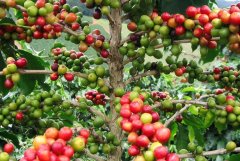
The history of coffee cultivation in Colombia is known as "green gold".
The history of coffee cultivation in Colombia can be traced back to the Spanish colonial era in the 16th century, and there are many theories about the history of coffee in Colombia: one: it is said to come from the island of Haiti in the Caribbean and from El Salvador in Central America. Second: in 1808, a priest introduced coffee beans to Colombia for the first time from the French Antilles via Venezuela. One of them

Introduction to the characteristics of catimor Alpine Organic Coffee varieties in Yunnan
Introduction to the characteristics of Yunnan catimor Alpine Organic Coffee varieties Iron pickup and Bobang, two classic high-quality coffee varieties, are the main cultivated varieties of Yunnan coffee. Katim series varieties were introduced from Kenya in 1991. This variety has stronger anti-virus ability and higher yield. At present, Katim is the most widely planted in Yunnan, and there are also a small amount of iron pickup and Bobang planting in Baoshan area.

Coffee cultivation and Coffee Culture
The legend of the cultivation of coffee and how coffee culture spread around the world has become one of the greatest and most romantic stories in history. Since the shepherds in the Ethiopian desert discovered this thing known as devil beans, they began to chew coffee beans and drink coffee in water. This atmosphere began in Ethiopia and went on an expedition to Arabia, quickly captivating sentient beings and becoming